Of Margaret Thatcher, Tam Dalyell, and the ARA General Belgrano
No, Mrs Thatcher didn't lie when she said the Belgrano was a threat.
In an otherwise excellent article in the Mail on Sunday this week, Dan Hodges repeated a charge against Mrs Thatcher, that she had lied about the sinking of the Argentine cruiser ARA General Belgrano. This had been widely believed at the time but disproved three decades later by documents declassified under the thirty-year rule.
I'm not quite sure what lie Dan thinks she told, as his article appears to specifically reject the main charge made against her at the time, of ordering the sinking in order to scupper not only the enemy cruiser but also the Belaunde peace plan. His article states "Her motivation was a misguided attempt to protect the armed forces and the wider national interest."
It has now been proven beyond reasonable doubt that her motive was indeed to protect the men and women of our armed forces. I believe that her accusers genuinely thought the charges they were making against her were justified, and I am sure Dan Hodges wrote what he did out of a memory of being convinced she was lying back at the time. However, given what we know know following the declassification under the 30-year rule of documents about the decision, I don't see that the case stands up either that Mrs Thatcher lied or that she was misguided.
And as she herself observed, only in Britain could a government face lasting criticism for an operation during a military conflict which removed a major enemy unit with no casualties on our own side and made it significantly easier to win that conflict.
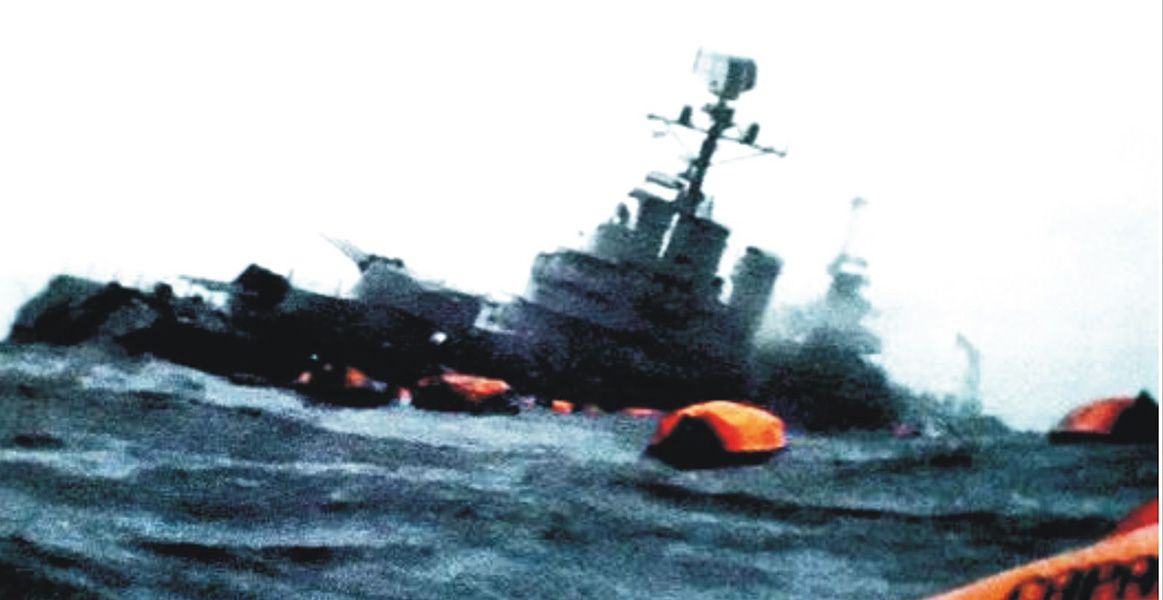
But the irony is that when we consider the actions of the main actors in that drama, it very much reinforces the central thrust of Dan Hodges' argument about what has happened to the level of integrity in politics.
Let's start with the man who originally made the accusation. Tam Dalyell, MP for first West Lothian and later Linlithgow, Laird of the Binns, a Labour MP for 43 years who ended that lengthy parliamentary career as Father of the House of Commons by virtue of being it's longest serving member.
As Brian Wilson wrote in his obituary of Tam Dayell for the Guardian,
"Although he never held ministerial office, he was one of the most recognisable and widely admired politicians of his era. This was not because Tam was always popular for the many causes he embraced, but due to the widespread recognition that he invariably adopted his positions on the basis of genuine belief, often recklessly in terms of his own self-interest. Even when he was utterly wrong, Tam could present his case with such serious-minded conviction as to create room for doubt."
I second all of that. Tam Dalyell was a maverick who would always say exactly what he thought regardless of who it annoyed. He would pursue his views with complete disregard either for the consequences for himself or of whether he annoyed his own colleagues. He was an absolutely marvellous ally to have when he was on your side and the most infernal nuisance when he wasn't. The kind of bloody-minded, brave and totally incorruptible gadfly that every parliamentary party needs to have one or two of, even if they don't make life easy for the others.
His former constituency of West Lothian is still remembered long after it disappeared in boundary changes for a very good question Dalyell asked. This was the so called "West Lothian question," about how devolved government of the kind under consideration at the time and later implemented by Tony Blair could possibly be fair. Fifty years later that question has still never received a satisfactory answer.
It says a great deal for the parliamentary Labour party of old that they put up with him for the 43 years from 1962 to 2005 and one of the most scathing criticisms I can make of the faction which runs the Labour party today is that I don't think there is a cat in hell's chance that they would allow a loose cannon like Tam Dalyell to become or remain a Labour MP today.
When Dalyell became convinced - wrongly, as I hope to prove - that Mrs Thatcher had ordered the sinking of the cruiser to literally torpedo the Peruvian president's peace proposals, I remember that my colleagues were exasperated with him. They thought he was obsessive, and seriously considered making jokes about his sanity. But they never considered calling him a liar, because they didn't believe it themselves and know nobody else would believe it. This was one of the occasions when he was "utterly wrong" but everyone knew he was acting from genuine conviction.
These are the words of a letter of reply Margaret Thatcher sent Tam Dalyell which he was so convinced was a lie:
Dear Dr. Dalyell,
Thank you for your letter of 30 October.
The answers to your questions are covered by the detailed Annex to my letter of 19 September to Mr. George Foulkes. On 2 May 1982, there were clear and unequivocal indications available to the Government that the Argentine Navy, including General Belgrano, provided a real and direct threat to the Task Force.
In the light of that threat, the precise position and course of Belgrano at that time were irrelevant. That was why the report that Belgrano had reversed course was not made known to Ministers at the time.
No evidence has at any time become available to the Government which would make Ministers change the judgement they reached on 2 May that the Belgrano posed a threat to the Task Force.
Yours sincerely
Margaret Thatcher
Let me explain why every word of that letter was the truth, the whole truth, and nothing but the truth.
Documents declassified in 2012 under the 30-year rule show exactly what the "clear and unequivocal indications" of a "real and direct threat" to the task force were.
The order to attack the ARA General Belgrano was not initiated by the government: it was ordered by the commander of the British Task force, Admiral Sandy Woodward, because he considered the cruiser to be a threat. He routed the order to HMS Conqueror through London so that the admiralty and the government would have the opportunity to review it. And when they did, this is what the intelligence briefing available to them informed them.
On the 1st of May 1982, Admiral Juan Lombardo ordered the Belgrano and all Argentine naval units to seek out the British task force around the Falklands, and to launch a “massive attack” the following day. GCHQ intercepted and decoded that signal.
Although she was moving away from the Falklands at the time of the attack, Belgrano's movements were entirely consistent with positioning herself to form part of a pincer attack which the Task Force commander expected would imminently be made against his force unless he did something to pre-empt it. That is why he ordered HMS Conqueror to attack the Belgrano. And it is why Ms Thatcher approved his order.
Regardless of the direction in which she happened to be steaming at the time of the attack, that cruiser was a threat to British lives. The people who ordered the attack on the Belgrano gave that order precisely because they had certain knowledge that she had been ordered to attack the task force and posed such a threat.
It is only fair to point out that even if Dalyell and others had been right and the Argentine Junta really had ordered the Belgrano to return to base, and Britain had known this, the attack would still have been legal under international law and the UN charter. As an article in the New York International Law Review which came to that conclusion explained it,
"For the purpose of evaluating the legality of the Conqueror’s action, however, it is irrelevant. Even if the Belgrano flotilla had been ordered to withdraw, there is no suggestion that it had surrendered. Under international law, a military unit, even one that is retreating, is not entitled to safe conduct until it surrenders. It is the position of the U.S. government, for instance, that “the law of war permits the attack on enemy combatants and enemy equipment at any time, wherever located, whether advancing, retreating, or standing still.”
Mrs Thatcher always said that when the facts about the decision to attack the Belgrano came out she would be vindicated. There will always be some die-hards among both Argentine nationalists and the British people whom no evidence could convince, but most people capable of taking anything remotely resembling an impartial view who study the facts now available to us will come to the conclusion that the evidence does indeed vindicate her actions.
I wrote about this in slightly more detail on the 40th anniversary of the sinking, at
The sinking of the General Belgrano, forty years on
The allegation that she was lying also put Mrs Thatcher in the infuriating position that she could prove her innocence only by releasing the information on which she made the decision. And, because the Argentines can read British papers and listen to the BBC, publishing that information would have told them that GCHQ had broken their codes and was reading their secret transmissions.
As Britain has rather a lot of form in successfully doing that sort of thing, (witness Enigma,) if the Argentine Junta had any sense they would have suspected this anyway, but it would still have been a grossly negligent betrayal of British national security to publicly confirm it for them.
I suspect many of those who believed the charge of lying against Mrs Thatcher did so because they looked at her reactions to questioning, saw the anger and frustration of a person being falsely accused of something she could have cleared herself of, but only by compromising national security, and misread those emotions of anger and frustration as guilt.
That or because the idea that she might be telling the truth was so contrary to their worldview that they would have believed the charges no matter how flimsy the evidence.
Now here is the other contrast with the present day. Imagine for a moment that the present incumbent of Number Ten, or several other prominent politicians of the current era, ever found themselves in the same position as Mrs Thatcher and were taking political damage because of an untrue charge, of which they could clear themselves, but only by releasing information which it is the national interest not to release. Does anyone seriously think that they would have taken the same path as Mrs Thatcher and kept their mouth shut?
I'm afraid if anyone is ever foolish enough to suggest to my face that the present incumbent would take more than five minutes to arrange a leak of the documents, which could not be traced back but left no doubt they were genuine, I will probably spend the following five minutes rolling around on the floor in hysterical laughter.
The House of Commons today is not entirely bereft of people like Margaret Thatcher or Tam Dalyell. But there are not many of them. And our politics is the poorer for it.

Comments